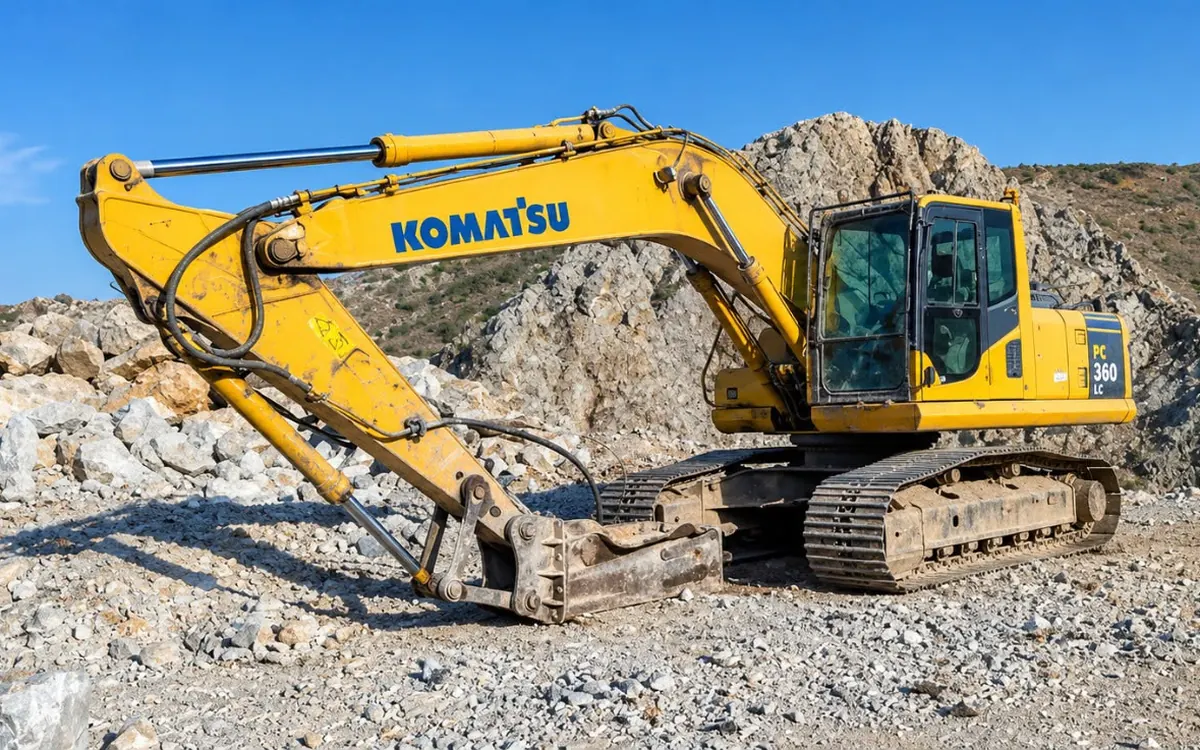
On an excavator, a small symptom means major downtime
The excavator sets the pace of the job site. When it stops, the trucks wait and the schedule slips. That is why a slowing arm, a leaking cylinder or an overheating hydraulic system should be dealt with before it turns into a breakdown.
On Komatsu excavators, the hydraulic system, engine and electronic controls work as one connected system. The source of a symptom is often not where it shows up: a loss of power can come from the pump, the engine or a sensor. We don't replace parts until we've confirmed the fault with measurements.
We carry out maintenance and most repairs at your job site with our service vans, and handle work that requires an overhaul at our main workshop in Ankara.
What we do on excavators
Everything your excavator needs, from periodic maintenance to major component overhauls:
- Periodic maintenance based on operating hours, oil and filter changes
- Main hydraulic pump and control valve repair and overhaul
- Swing motor, swing gearbox and travel motor repair
- Seal replacement on boom, arm and bucket cylinders
- Undercarriage inspection: track chain, rollers, idlers and sprockets
- Pin and bushing replacement on bucket and arm linkages
- Engine fault diagnosis and engine overhaul
- Monitor error codes and electronic fault diagnosis
Common excavator faults we see
Slow arm and bucket
Hydraulic pump wear, internal valve leakage or low pilot pressure make the arm slow and weak.
Swing knocking or slipping
Wear in the swing motor, swing gearbox or swing gear shows up as jerking and slipping when the swing comes to a stop.
Travel pulling to one side
A leak in the travel motor, a final drive problem or uneven track tension keeps the machine from traveling straight.
Oil leaking from cylinders
A worn seal or scored rod shows up as the arm drifting down on its own under load and the oil level dropping.
Hydraulic oil overheating
A clogged oil cooler, a misadjusted relief valve or internal leakage heats the oil and makes seals fail early.
Play in the bucket linkage
Worn pins and bushings make precise digging difficult and, if neglected, permanently damage the bores.
Komatsu excavators we service
We service mini, mid-size and large models in the PC series, as well as PW series wheeled excavators.
Crawler excavators
- PC130
- PC160
- PC200
- PC210
- PC220
- PC240
- PC290
- PC300
- PC350
- PC360
- PC450
- PC490
Mini and midi excavators
- PC30MR
- PC35MR
- PC55MR
- PC88MR
Wheeled excavators
- PW148
- PW160
- PW180
Don't see your model? We service all Komatsu excavators; just send us your model. Message us on WhatsApp →
Common questions
Do I need to bring my excavator to the workshop?
Usually not. We carry out most maintenance, fault diagnosis and repairs at your job site with our service vans. Work that requires the workshop, such as a pump, valve or engine overhaul, is planned together with you.
How do I know when the undercarriage needs replacing?
We inspect wear on the track chain, rollers, idlers and sprockets, then tell you the condition of the undercarriage and the right time to replace it. That way you can schedule the replacement for your quietest period.
Do you also service older excavator models?
Yes. We service all Komatsu excavators, old and new generation. On older models with limited electronic controls, we track down the fault with pressure and flow measurements.
Do you supply the parts?
Yes. As an authorized Komatsu service provider, we identify parts by model and serial number and go over genuine and aftermarket options with you. The same team then installs the part on your machine.
Let's schedule service for your excavator
Send us your machine's model and the symptom you're seeing on WhatsApp, and we'll plan the best solution together.
Our services for this machine
Hydraulic Systems
Pump, valve block, cylinder seal and hose renewal. Repairs verified with pressure tests.
Get support →Fault Diagnosis
Electronic diagnostics, fault code reading and fast on-site diagnosis to keep your machine's downtime to a minimum.
Report a fault →Periodic Maintenance
250 / 500 / 1,000 / 2,000-hour maintenance plans, oil and filter changes, and checklist-based reporting.
Plan maintenance →